CONTACT US
Call us to discuss your project
905-807-4389
Choose how we can help you below

Helical Pile Sizing for Decks

Back to blog

Helical pile sizing for decks can be confusing. Use too few or too small piles and your deck might sag, but use too many or oversized piles and you waste money. As a contractor, you want a solid deck foundation without guesswork. The good news is, sizing helical piles for your deck follows a straightforward process. In this guide, we break down how to determine the right helical pile size for deck projects, how to space them properly, and how many you may need for a given deck or even a shed. By understanding these fundamentals, you’ll be equipped to build safe, sturdy decks on helical pile foundations.

Helical Pile Sizing for Decks: Step-by-Step Guide

Partially built deck: joists and beam framing on posts anchored to metal pile heads; tools and cords on the ground.

Helical pile sizing for decks involves a few key calculations and decisions. In summary, you will:
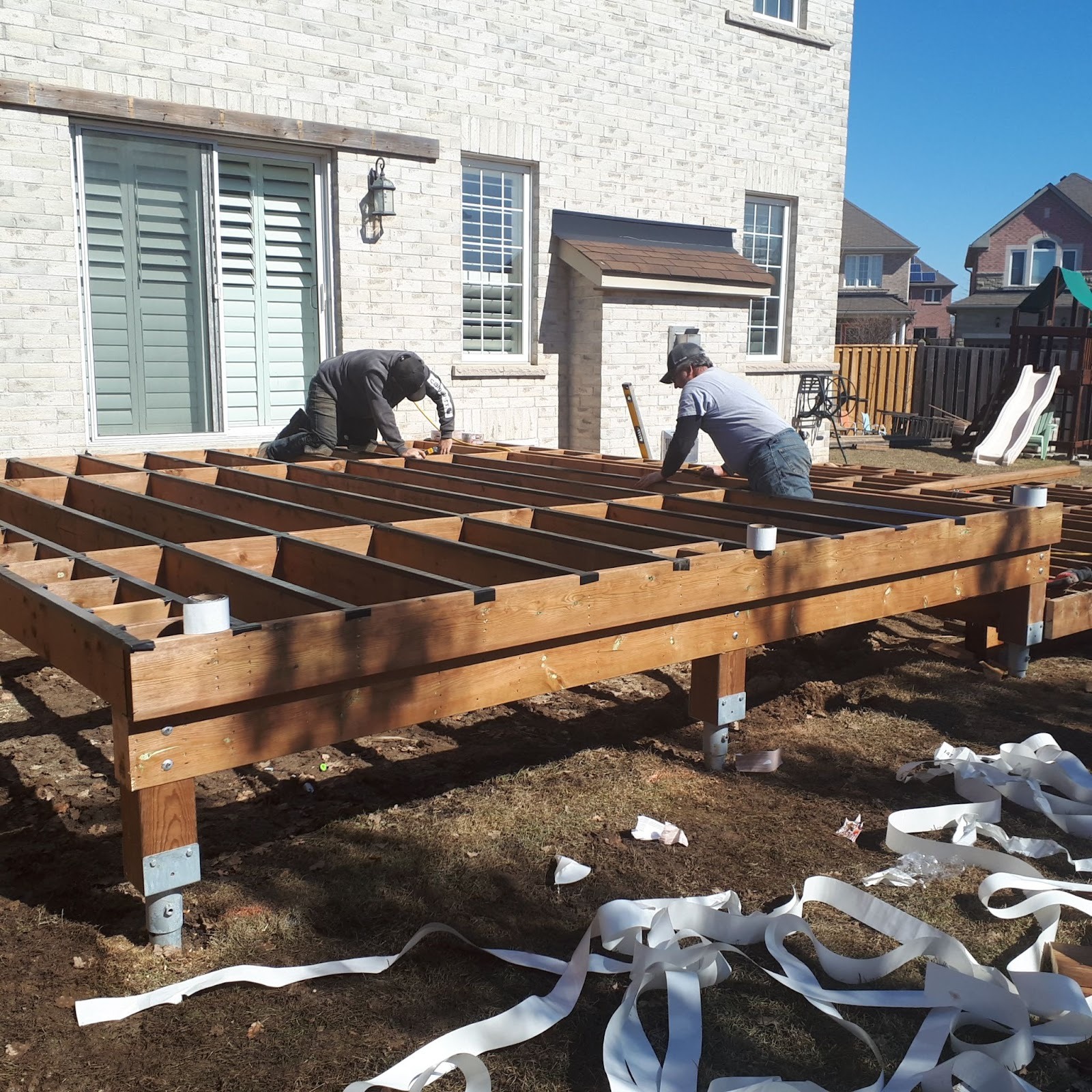
  1. Calculate Helical Pile Loads for Decks: Estimate the total weight your deck needs to support (deck materials plus live load). For example, use roughly 50 lb/ft² as a design load. Multiply by the deck’s area to get the total load, then divide by the number of piles you think you’ll use to see how much weight each pile should carry.
  2. Choose Pile Size and Count: Based on the load per pile and your soil conditions, select an appropriate helical pile. Most decks use a small steel pile (around M2 3” diameter) with one helix plate (10” diameter) that can handle residential deck loads. If your soil is very soft, you might require extension to extend the pile deeper to stronger soils.Determine how many piles you need by ensuring no single pile is overloaded. Often, pile count comes down to placing a support at each deck corner and along the beams, so the spans are reasonable.
  3. Plan Spacing and Placement: Lay out where each pile will go under the deck. Try to space the piles evenly under the major beams. Ensure that there is at least three times the helix diameter between any two piles to prevent their soil bearing areas from overlapping. Adjust the layout if any spans are too long; it’s better to add a pile than to overstretch spacing. Following these spacing rules ensures your helical pile sizing for decks results in a strong, stable deck
  4. Finalize the Helical Pile Design for Decks: Verify that your plan complies with local building codes and confirm the live load and dead load requirements for your location (for example, piles may need to reach a specific depth or capacity). Make any final tweaks, such as planning to verify each pile’s capacity by reading its installation torque. At this point, you have a solid foundation plan ready for installation.

Rules to Keep Your Deck Solid

Two installers fastening joists on a deck frame supported by metal pile brackets and posts beside a house.

In any plan for helical pile sizing for decks, proper spacing is as important as proper sizing. Keep these guidelines in mind:

  • Follow Beam Span Guidelines: Position piles so that deck beams don’t span beyond their limits. For most decks, this means placing a pile roughly every 6 to 8 feet under each beam, ensuring adequate support and preventing sagging.
  • Keep Minimum Distance Apart: Ensure at least 3 to 4 times the helix diameter between adjacent piles. In practice, that usually means keeping piles a few feet apart so their load areas don’t overlap, which could reduce their individual load-bearing capacity.
  • Typical Spacing Range: Deck piles are often spaced about 5 to 10 feet on center. Eight feet is a common sweet spot; it provides solid support without using excessive piles, optimizing both stability and cost. Pile spacing is dictated by the allowable beam span

Following these spacing rules ensures your helical pile sizing for decks results in a strong, stable deck.

How Many Helical Piles for a Deck? Sample Layouts by Deck Size

Rectangular deck frame with rows of galvanized pile heads arranged in a grid beneath the joists near the house.

Here are a couple of common scenarios for helical pile sizing for decks:

  • Small Deck (around 10’ x 10’): If one side of a small deck is attached to a house, you’ll typically use 2 helical piles (one at each outer corner). If the deck is free-standing, plan for four piles (one at each corner).
  • Large Free-Standing Deck (approx 16’ x 20’): Bigger decks need more piles. A 16’ x 20’ deck might need around 8 to 12 piles in a grid (for example, two rows of four plus a third row if needed).

Ultimately, helical pile sizing for decks is about using sufficient supports to ensure every part of the deck is adequately supported.
Helical Pile Footings for Sheds & Backyard Structures

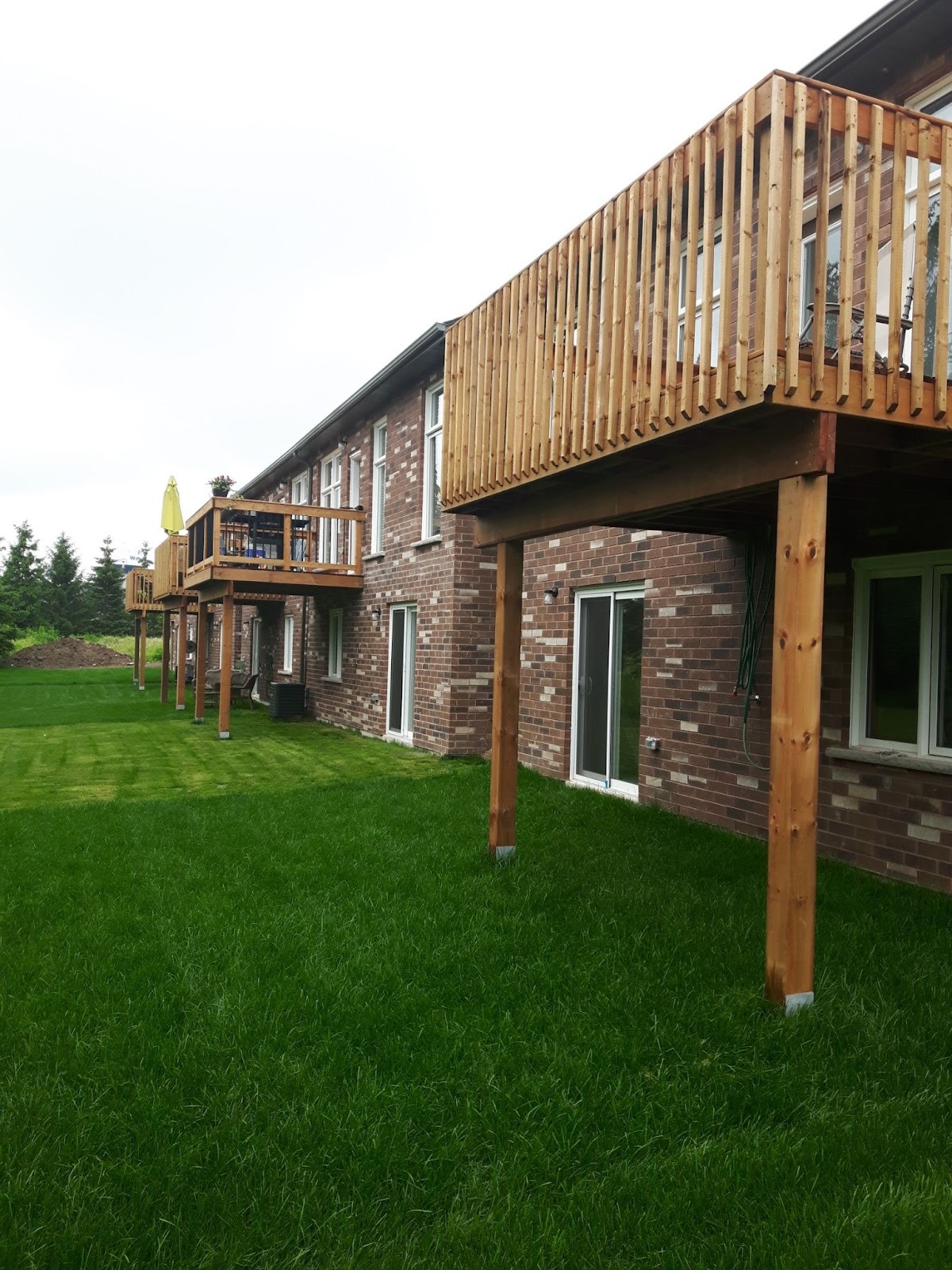
Long, elevated wood decks on a multi‑unit brick building, each supported by posts above a wide grass yard.

When planning the foundation for a shed or other backyard structure, the size and number of helical piles required are crucial for stability and longevity. For smaller sheds, typically around 8’ x 10’ in dimension, a foundational setup of four helical piles is usually sufficient. These piles are strategically placed at each corner, providing a robust and level base for the shed’s floor. This configuration effectively distributes the weight of the structure, preventing settling or instability.

As the size of the shed increases, particularly for structures measuring 12’ x 12’ or more, additional support becomes necessary. In these cases, simply using four corner piles may not be enough to prevent the floor joists from sagging over time. To counteract this, it's recommended to incorporate extra piles along the longer sides of the shed. Typically, one additional pile is placed in the middle of each long side, effectively reducing the span of the floor joists and ensuring the floor remains level and sturdy under various loads. When sizing helical piles for a deck, don't forget to consider loading from heavy furniture, BBQs, hot tubs, etc.

Beyond supporting vertical loads, these helical piles offer an additional benefit: anchoring the shed against wind uplift. Lightweight structures like sheds can be vulnerable to strong winds, especially in open areas. The helical design of the piles provides excellent resistance to upward forces, keeping the shed firmly grounded even during adverse weather conditions. This inherent uplift resistance is a significant advantage, contributing to the overall safety and durability of the structure.

Unless there are specific plans to store exceptionally heavy items within the shed, such as a vehicle, large machinery, or construction materials, standard helical pile sizing will more than meet the structural demands. However, if the shed is intended for such heavy-duty use, consulting with a structural engineer or a helical pile expert is advisable to determine appropriate larger pile specifications. Just as with deck construction, thorough planning and correct helical pile sizing principles are paramount. Adhering to these guidelines ensures that your shed foundation is secure, stable, and built to last, providing a firm base for your backyard structure for many years to come.
Helical Pile Order Checklist

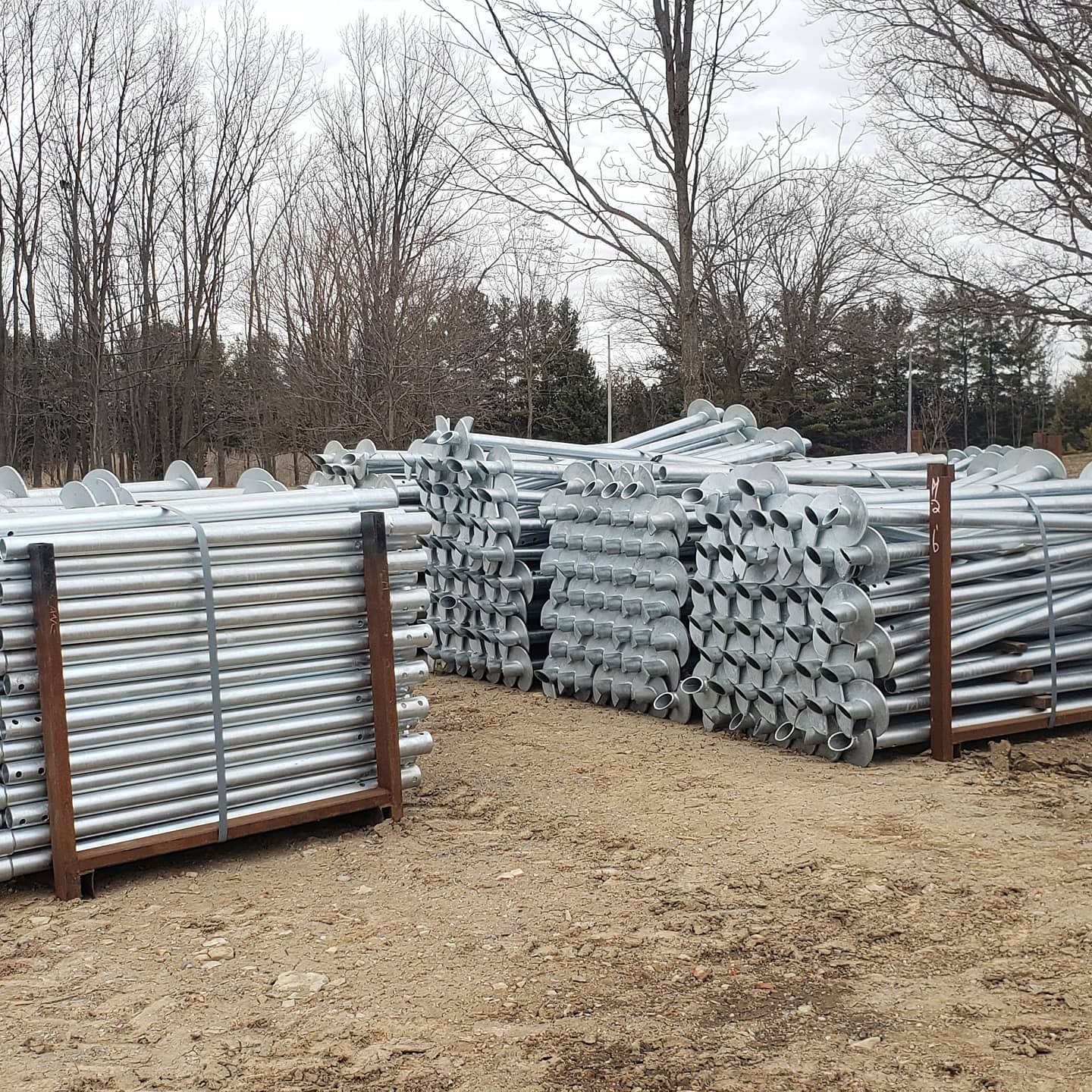
Stacks of galvanized steel helical piles with circular helix plates bundled and stored outdoors at a construction yard

To avoid delays, have the following details ready when you order:

  • Project Details: Provide the basic info about the project (for example, a deck versus a shed) along with the deck’s dimensions and height. Note if it’s attached to a house or if it’s free-standing.
  • Pile Layout: State how many piles you anticipate using and where they’ll go. For instance, you might say “three piles along the 16’ front beam.” This helps the supplier visualize your plan and double-check your helical pile sizing for decks.
  • Beam Span: Know your beam span as this will typically dictate how the helical piles are spaced
  • Load Requirements: If you know the expected load per pile or total deck load, include that. If not, describe the deck (e.g. a residential deck for outdoor use) so the supplier can estimate typical loads.
  • Soil Information: Mention what you know about the soil on site. Is it mostly clay, sand, or something else? Any details (or a soil report, if you have one) will guide the helix configuration and the pile length needed.
  • Site Access: Note any access limitations or special conditions at the site. For example, tight access through a gate, overhead power lines, or a steep slope. This ensures the installer brings appropriate equipment.
  • Service Needed: Specify whether you’re purchasing the piles for your own crew to install or if you want installation services. Mascore Helical Piles is unique in that you can either buy certified piles directly or have their team handle the install, letting them know your preference upfront will streamline the process.
  • Utility Locates: Ensure all utilities on-site have been located. Contact your local municipality for instructions on how to proceed with this.

Having these details prepared will make the ordering process smooth and efficient. A dependable company will use this information to get you the right piles on time and avoid any back-and-forth.
Building on Solid Ground for Your Deck Projects

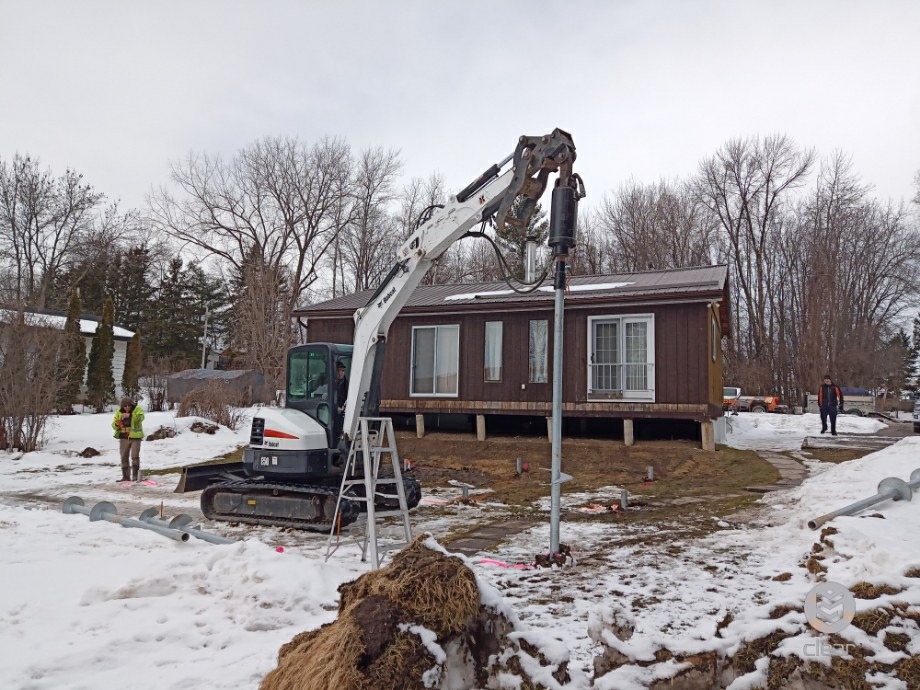
Compact excavator with a hydraulic drive installing a helical pile beside a cottage on snowy ground; a worker watches.

You’ve learned the essentials of helical pile sizing for decks, from picking the right size and helical pile spacing, to confirming capacity with torque. With this know-how, you can plan deck foundations that are safe, solid, and long-lasting. The final step is choosing a supplier you can trust. Mascore Helical Piles stands out here. Because Mascore isn’t tied to a franchise, you deal with one consistent, experienced team for all your projects. You also have the flexibility to either buy certified piles or have Mascore’s crew install them, whichever suits you best. This lean approach keeps costs competitive and ensures dependable service. When you plan properly and partner with the right experts, your deck will rest on a rock-solid foundation. Ready to get started? Get a quote and build on solid ground.

Summary 

This guide outlines key aspects of helical pile sizing for decks, including spacing rules, the number of piles required for a deck or shed, and design considerations. It also explains how to verify pile capacity during installation and provides a handy checklist to streamline your ordering process. Armed with these professional tips, you can confidently plan a dependable helical pile foundation for your next deck.